
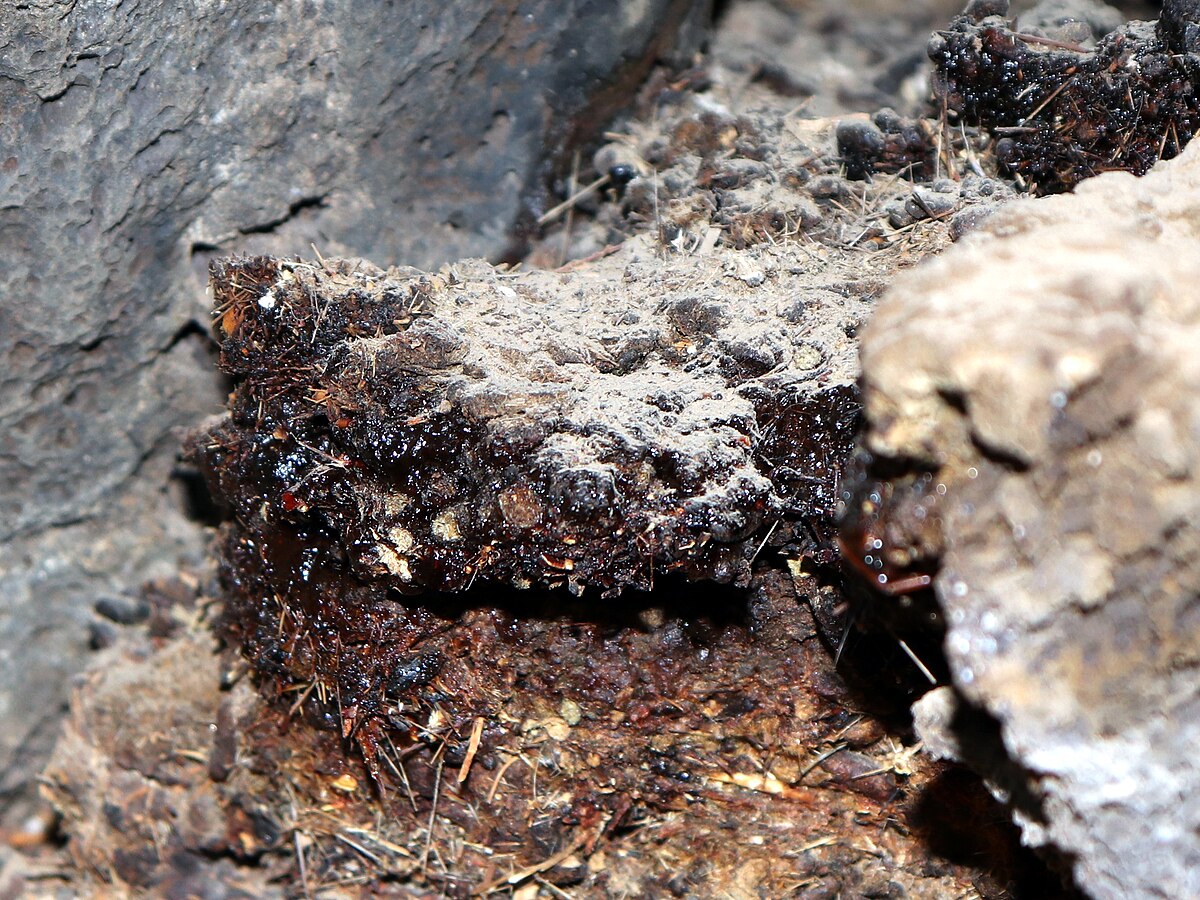
In the high altitudes of the Himalayas, a sticky, tar-like substance oozes from the cracks in ancient rocks. Known as Shilajit, this powerful resin has been used for thousands of years in traditional Ayurvedic medicine. Today, it’s gaining popularity around the world for its wide range of health benefits, from boosting energy to enhancing brain function.
But what exactly is Shilajit, where does it come from, and what does science say about its effectiveness?
🏔️ What is Shilajit and Where Does It Come From?
Shilajit is a natural exudate, formed over centuries from the decomposition of plant and microbial matter trapped within layers of rocks. High mountain ranges like the Himalayas, Altai, Caucasus, and Gilgit-Baltistan are the primary sources. It appears as a dark brown to black resin and becomes soft and sticky when warm.
The term “Shilajit” comes from Sanskrit, meaning “conqueror of mountains and destroyer of weakness,” reflecting its revered status in traditional medicine.
Geologically, Shilajit is considered a mineral pitch, and its main bioactive component is fulvic acid, along with over 84 minerals including iron, zinc, magnesium, and potassium.
⚗️ How Is Shilajit Formed?
Shilajit is not a recent discovery; its formation is a result of millennia-long geological and microbial processes. Here’s how it happens:
- Organic matter (plants, lichens, moss) becomes trapped between rock layers.
- Pressure and temperature changes due to tectonic movement cause slow decomposition.
- Microbial activity further breaks down the matter, forming a humic substance.
- This results in a mineral-rich tar, seeping out of rocks in summer.
💪 Health Benefits of Shilajit
1. Boosts Energy and Reduces Fatigue
Shilajit helps enhance mitochondrial function, which improves energy production at the cellular level.
2. Enhances Brain Function
The fulvic acid in Shilajit exhibits antioxidant properties, which help prevent the accumulation of tau protein—a known contributor to Alzheimer’s disease.
3. Supports Testosterone Levels and Fertility
In men, Shilajit has been found to increase testosterone levels, sperm count, and motility.
4. Improves Heart Health
Shilajit may help reduce cholesterol and triglyceride levels, and protect the heart from damage caused by stress or toxins.
5. Anti-Inflammatory and Anti-Aging Properties
The resin’s antioxidant components help fight free radicals, slowing down aging and reducing inflammation.
🌍 Where Is It Sourced Today?
The most sought-after Shilajit is sourced from:
- Gilgit-Baltistan (Pakistan)
- Himalayas (India, Nepal, Bhutan)
- Altai Mountains (Russia)
- Caucasus Mountains (Georgia)
Due to its growing popularity, adulteration and counterfeit products are common. Always seek third-party tested, purified Shilajit from reputable brands.
📚 References
- Pandit, S. et al. (2012). Clinical Evaluation of Shilajit on Physical Performance and Adaptogenic Effect in Healthy Volunteers. Andrologia.
- Carrasco-Gallardo, C. et al. (2012). Shilajit: A Natural Phytocomplex with Potential Procognitive Activity. International Journal of Alzheimer’s Disease.
- Pandit, S. et al. (2015). Clinical Evaluation of Purified Shilajit in Healthy Male Volunteers. Andrologia.
- Bhattacharya, S. K. et al. (2003). Protective effect of Shilajit on myocardial injury. Phytotherapy Research.